Thursday, November 21, 2013

Key Area 3: Healthy Communities --> a personal story


There are three key areas that CSHC is focused on: Healthy Bodies, Healthy Relationships and Healthy Communities. These focus areas speak to the core of our work; they support our vision for the community and the mission we are on to achieve it.
In this series of blogs, we present some of our success stories that highlight a program from each of our three focus areas.
 
In this blog, we look at a "Healthy Communities" personal story.
 
------------------------------------------

Lemlem’s Story: FAIR (Families Achieving Inclusive Relationships)


When you ask Lemlem Haile what her first experience was when she became involved in FAIR – Families Achieving Inclusive Relationships, the word you’ll hear first is “surprise.”


“I thought maybe it would be a hard conversation to have, that people wouldn’t want to come to our first meeting. I was surprised by the response; people really wanted to understand and talk about sexual health, especially with their kids.”
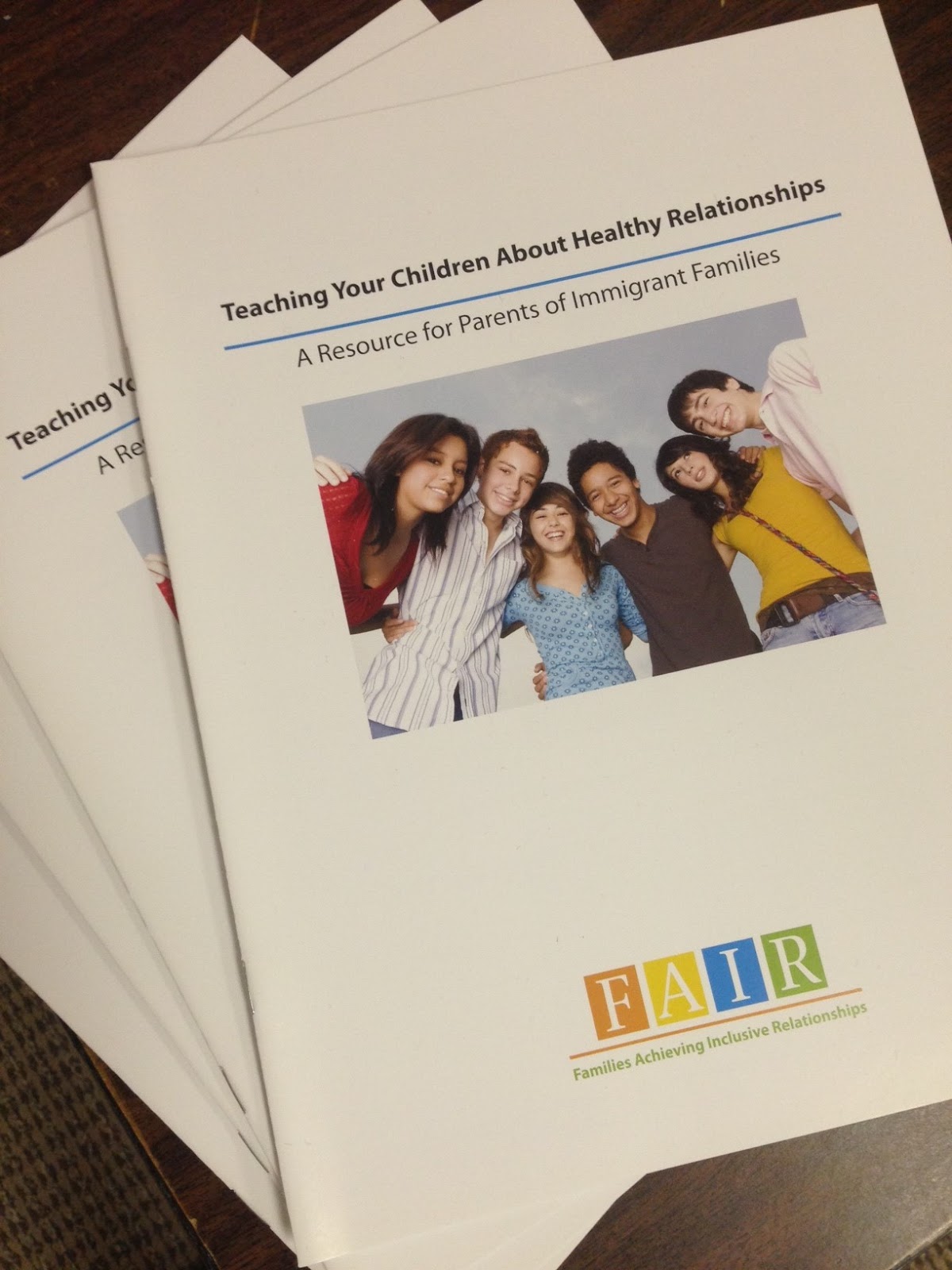

She’s talking about her initial reaction to Calgary Sexual Health Centre’s community development project that reaches out to immigrant parents. As a Community Social Worker with The City of Calgary, she often works with immigrant communities and was invited to the first meeting as a community partner.


“The first dialogue we had was about how do we talk about this as a community? What are your strategies to talk to your kids?” says Haile. “And they had questions, like ‘how young is too young to talk to your kids?’ And we said if they’re old enough to understand, talk to them. And that was where parents were like, yeah, I’m going to go talk to my three-year-old son – it was an ‘aha’ moment for a lot of parents.”


The project offers support and information to help parents talk to their children about their family values and how they connect to healthy relationships and healthy bodies. She says parents were especially engaged once they started talking about the safety of their children.


“We talked about how the more parents make it safe for them to talk, the more these kids will come home and talk to their parents instead of going on the internet for answers.”


Haile says perhaps one of the most important aspects of FAIR is the way facilitators bring the parents in as partners and ask for their feedback.


“The parents were really engaged,” she says. “They were reviewing the information and they had a say and they gave us really good ideas. They were the ones who suggested that instead of a Sexual Health Guide, let’s call it a Parent Guide, and it really is – it’s about relationships and values.”


Most of all, Haile believes that it’s the respect for different cultures that makes FAIR successful. She says the program helps people bridge the conversations they’re already having in a religious or cultural context with accurate sexual health information.


“There’s a fear and perception that someone else might push their values on a community,” she says. “But everyone talks about sexual health, every religion talks about it – it’s just a different way of presenting the information.”

Monday, November 4, 2013

Congrats to our Blake Spence - Top 40 Under 40!

We are thrilled to congratulate our own Blake Spence - program coordinator of our Wise Guyz program - on being selected as one of Avenue Magazine's Top 40 Under 40!

He is being recognized for his amazing work with the Wise Guyz program, as well as his entrepreneurial drive in other areas of his life.

Read the full article here:
http://www.avenuecalgary.com/top-40-under-40/blake-spence


Learn more about our WiseGuyz program - and how you can support this important work - at www.WiseGuyz.ca.

Friday, October 25, 2013

Key Area 2: Healthy Relationships --> a personal story

There are three key areas that CSHC is focused on: Healthy Bodies, Healthy Relationships and Healthy Communities. These focus areas speak to the core of our work; they support our vision for the community and the mission we are on to achieve it.

In this series of blogs, we present some of our success stories that highlight a program from each of our three focus areas.
 
In this blog, we look at a "Healthy Relationships" personal story. We believe good relationships and sexual health are inextricably linked. Our emphasis on healthy relationships means that our programs are having an impact on the issues of bullying, homophobia, and violence prevention, just to name a few. Whether it’s with parents, professionals or youth, our programs discuss healthy decision-making, communication, self-esteem and awareness of your own boundaries and values.
 
------------------------------------------
 
Healthy Relationships:  Leslie’s Story - WiseGuyz
 
“It’s all boys all the time,” laughs Leslie McRae, Vice Principal at Sherwood School.
 
Leslie McRae, Vice Principal at Sherwood School
(photo credit: Evolution New Media)
Those boys are a small group of grade nine students taking part in the WiseGuyz program at the school. Once a week they meet in a designated classroom for part of the school day and Tristan from Calgary Sexual Health Centre facilitates the program.
 
To someone peeking inside the classroom, sometimes it looks like a regular healthy sexuality class, sometimes it looks like boys roughhousing and joking around. But something more important is really going on.
 
This is a program that teaches boys about consent and healthy relationships, not just STIs and anatomy. It’s challenging the boys’ views of masculinity and teaching them to look critically at the media messages they see every day. It’s tackling bullying and homophobia. It’s a program about respect and empathy.
 
“This is really the only thing out there that’s just for boys,” says McRae. “It’s so important to have something directed just to them about things they wonder about, delivered by people who can address those things.”
 
“They have somebody who’s open to hearing things that they’re talking about and lets them be silly and ask weird questions.”
 
She recently saw the impact of the program when an RCMP officer came in to talk to the school.
 
“It was a fairly deep presentation; he talks about things like suicide and bullying, family issues that you don’t talk about. The boys who stayed behind after the assembly to shake his hand and say thank you were the WiseGuyz.”
 
“They grow from the program, and they feel more confident,” she says. “They start to look at bigger issues, rather than just ‘if it’s my issue’ – that’s really what I see from their actions.”
 
McRae also says that one of the most unexpected outcomes for her is the bonds the boys make with one another: “There are boys who are friends because of the program who never would’ve been friends without it.”
 
When asked why the boys want to be there and keep coming back, her answer is simple.
 
“They know they’re valued,” she says. “For some boys it helps keep them in school, helps keep them engaged, helps keep them connected to somebody who, if or when things go south in the future, they have one more positive adult role model to look to.”
 
McRae can’t say enough good things about the program and looks forward to working with WiseGuyz again in the new school year.
 
“It’s hard to be a teenager, whether you’re a girl or a boy,” says McRae. “The more people you have in your life telling you positive things, helping you be informed, creating a structure you can access resources from – it’s not such a big unknown world.”