Showing posts with label sex ed. Show all posts

Monday, January 6, 2014

Lisa’s Story: The Training Centre

The Training Centre at the Calgary Sexual Health Centre provides a number of professional development opportunities for service providers. Our training ensures that professionals have the skills and knowledge to integrate sexual health into their everyday work with clients.

Here's a personal story from one of our Training Centre clients!

---------------------------------------

When Lisa Seel-Thompson at Calgary Family Services hires new staff for a Spirit or Starburst program, she often sees something missing right off the bat.

“I’ve had staff come in who are amazing youth workers – they love youth and can have every other conversation with them. But when it comes to sexual health they’re frozen. It scares them."
 
But that quickly changes, says Seel-Thompson, after exposure to the Training Centre workshops from Calgary Sexual Health Centre. She’s worked with the Spirit/Starburst programs, which are aimed at junior high girls, for more than ten years and is a strong advocate for incorporating CSHC’s programs into staff practice.

“For example, a young person might come up to a youth worker and say, ‘I think I’m gay, how do I talk to my parents about this?’” says Seel-Thompson. “These are big life questions and it can be overwhelming for staff when they’re new and they haven’t had to deal with the sexual health part. The relationship with CSHC has allowed us to be mentored around this subject – how to talk to young people and be more comfortable and confident.”

From sessions on creating a safe space for LGBT clients, to helping clients who have had negative sexual experiences, Seel-Thompson says the interactive workshops have a format that works.

“I like that you can just have real, open, honest conversations in the workshops. I’ve had really, really in-depth conversations that I’ve never had in any other training, and that’s reflective of the value of Calgary Sexual Health.”

When asked if she would recommend the training to others, Seel-Thompson maintains that it’s critical.

“I feel very strongly that it’s important for organizations to do this. Young people need to be well-informed and therefore the people who are leading youth need to be informed ­­– they could even do damage if they don’t know what they’re talking about,” she says.

“If you’re working with youth, you should be really well informed about sexual health, since that’s 90% of the conversations we have with youth. It’s such a big part of their decision-making and their lives and trying to figure out who they are.”

And how has it affected the people who really matter – the girls themselves?

“I really see that young people know they can walk into our spaces and it’s a safe place,” says Seel-Thompson. “I think that’s a direct result of me and my staff feeling confident and comfortable because of the information we’ve learned. We feel well-informed and we’re so well supported.”

“We really value that partnership with CSHC, and we’ll continue to rely on it to inform our practice and make sure we stay relevant. We’re just a huge fan of Calgary Sexual Health Centre.”
 
-----------------------------------------
 
Talk to us about our upcoming workshop schedule, or to have us deliver a workshop at your organization. Please note that workshops can be customized to meet the particular needs of your staff and the clients you serve.

  
Each program as a stand-alone can be delivered in approximately half a day, but programs may be combined to create a full day or more, based on agency needs.

To book a training session for your organization, or to discuss customized training, please contact:     

Valerie Barr
Training Centre Manager
403-283-5580 Ext. 317 or
vbarr@calgarysexualhealth.ca

Thursday, January 2, 2014

New Year! New workshop schedule!


We are pleased to ring in the new year with our Winter 2014 workshop schedule!


“Facilitating Healthy Relationships”

February 26, 2014   
9am – 12pm

In this workshop, participants will gain knowledge and tools to help youth navigate the challenges of developing healthy relationships in today’s world.  Practical activities and frameworks for helping youth make conscious and healthy sexual decisions are also examined and applied to real life situations.

Fee: $50.00 per person, including workshop materials


“Supporting Sexuality with Older Adults”

March 12, 2014  
9am – 12pm

Designed for those working with older adults, participants will increase their confidence and comfort talking with clients about sexuality.  Participants receive practical suggestions, tips and resources to start talking about sexual health and advocating for sexual well-being with older adult clients.

Fee: $50.00 per person, including workshop materials


“Supporting Sexuality with People with Disabilities”

April 9, 2014   
9am – 12pm

This session is designed for professionals working with people with developmental disabilities.  Participants will explore their own attitudes about sexuality and receive practical suggestions for engaging clients in conversations about sexual health and well-being.  This workshop will also help professionals to set boundaries around what is appropriate behaviour, clarify age of consent guidelines and make referrals to community resources.

Fee: $50.00 per person, including workshop materials 


“Youth and Media:  Responding to Sexual Bullying”

May 15, 2014 
7 – 9pm 

How have new media and technology changed young people’s views of sexuality and relationships?  In this session we will look at the reality of what is accessible and how youth are responding.  Most importantly we will explore the role of parents and professionals in facilitating healthy sexual decisions including healthy use of technology.

Fee: $20.00 per person, including workshop materials

 
----------------------------------------------

 Location:
Calgary Sexual Health Centre
#304, 301 14 Street NW, Calgary, AB


To Register:
Call Valerie Barr at 403. 283. 5580 ext. 317
vbarr@calgarysexualhealth.ca

or

Call Becky Van Tassel at 403. 283. 5580 ext. 323 

Please Note: Level “A” Alberta Social Work Continuing Education Credits are available for attendance these workshops via a partnership with the Calgary Counselling Centre


----------------------------------------------


Want to bring a workshop to your organization? We can customize our sessions to suit your needs.

To book a training session for your organization, or to discuss customized training, please contact:

        
Valerie Barr
Training Centre Manager
403-283-5580 Ext. 317 or

vbarr@calgarysexualhealth.ca


Thursday, November 21, 2013

Key Area 3: Healthy Communities --> a personal story


There are three key areas that CSHC is focused on: Healthy Bodies, Healthy Relationships and Healthy Communities. These focus areas speak to the core of our work; they support our vision for the community and the mission we are on to achieve it.
In this series of blogs, we present some of our success stories that highlight a program from each of our three focus areas.
 
In this blog, we look at a "Healthy Communities" personal story.
 
------------------------------------------

Lemlem’s Story: FAIR (Families Achieving Inclusive Relationships)


When you ask Lemlem Haile what her first experience was when she became involved in FAIR – Families Achieving Inclusive Relationships, the word you’ll hear first is “surprise.”


“I thought maybe it would be a hard conversation to have, that people wouldn’t want to come to our first meeting. I was surprised by the response; people really wanted to understand and talk about sexual health, especially with their kids.”


She’s talking about her initial reaction to Calgary Sexual Health Centre’s community development project that reaches out to immigrant parents. As a Community Social Worker with The City of Calgary, she often works with immigrant communities and was invited to the first meeting as a community partner.


“The first dialogue we had was about how do we talk about this as a community? What are your strategies to talk to your kids?” says Haile. “And they had questions, like ‘how young is too young to talk to your kids?’ And we said if they’re old enough to understand, talk to them. And that was where parents were like, yeah, I’m going to go talk to my three-year-old son – it was an ‘aha’ moment for a lot of parents.”


The project offers support and information to help parents talk to their children about their family values and how they connect to healthy relationships and healthy bodies. She says parents were especially engaged once they started talking about the safety of their children.


“We talked about how the more parents make it safe for them to talk, the more these kids will come home and talk to their parents instead of going on the internet for answers.”


Haile says perhaps one of the most important aspects of FAIR is the way facilitators bring the parents in as partners and ask for their feedback.


“The parents were really engaged,” she says. “They were reviewing the information and they had a say and they gave us really good ideas. They were the ones who suggested that instead of a Sexual Health Guide, let’s call it a Parent Guide, and it really is – it’s about relationships and values.”


Most of all, Haile believes that it’s the respect for different cultures that makes FAIR successful. She says the program helps people bridge the conversations they’re already having in a religious or cultural context with accurate sexual health information.


“There’s a fear and perception that someone else might push their values on a community,” she says. “But everyone talks about sexual health, every religion talks about it – it’s just a different way of presenting the information.”

Monday, November 4, 2013

Congrats to our Blake Spence - Top 40 Under 40!

We are thrilled to congratulate our own Blake Spence - program coordinator of our Wise Guyz program - on being selected as one of Avenue Magazine's Top 40 Under 40!

He is being recognized for his amazing work with the Wise Guyz program, as well as his entrepreneurial drive in other areas of his life.

Read the full article here:
http://www.avenuecalgary.com/top-40-under-40/blake-spence


Learn more about our WiseGuyz program - and how you can support this important work - at www.WiseGuyz.ca.

Monday, May 6, 2013

Questions asked during Sex Ed Class - Part 2: Sex

My boyfriend and I just started having sex and I missed my period, is that normal?
If you are not using protection, there is a risk of pregnancy but there are other factors that can cause a person to miss a period.


Some questions to ask yourself are: Is my period normally regular? Could it be late? Am I feeling stressed out about life, school or even the possibility of being pregnant (sometimes stress can cause a delay in menstruation)?

If you are worried about an unplanned pregnancy, it is wise to get a pregnancy test. They are available at any pharmacy or free at our office.


Is it true if a girl doesn’t bleed the first time she isn’t a virgin?

No. Many people believe that if a woman has never had sex before, her hymen will tear the first time. (The hymen is a piece of skin that partially covers the opening to the vagina.) However not all women are born with a hymen, and the hymen can be very thin and stretch out with normal physical activity as a child (riding a bike or a horse, etc.) Some women have a hymen and still don't bleed the first time they have sex.


Every woman is a bit different. If a woman or girl doesn't bleed or doesn't have a hymen it does not mean she has had sex.


Can you get pregnant by masturbating beside each other?

For there to be a risk of pregnancy, pre-come and/or semen need to be on the vulva, in the vagina, or around the anus (because it is mere inches from the vagina). This is a very low risk activity for pregnancy and STIs, if the male partner ejaculates far from his partner's genitals, and washes his hands and body well afterwards.


If you are going to have sex for the first time and you are scared, what should you do?

Very good question. People should pay attention to how they feel inside and what their bodies are telling them. A bit of nervousness is normal but if you are feeling scared, pressured or find you are not aroused or turned on, then it is likely not the right time yet.

Remember if a person is not feeling comfortable she or he has the right to stop sex at ANY time. Consent means two people (or more) deciding to do the same thing at the same time, in the same way with each other. Any sexual act that is initiated upon someone without consent is illegal.

Monday, April 29, 2013

Sex without Regret: checking in with "Head, Heart, Body"

How do I know when I am ready for sex? How do I know what sexual activities I am comfortable with? How will I know what my boundaries are?

The answer to these questions is different for every person.


Deciding what you feel comfortable doing or “how far” you want to go is a personal choice that you have to make each and every time you become physically or emotionally involved with another person. Having a physical desire to enjoy sexual pleasure is not the same thing as being emotionally prepared for sex with another person.


Head, Heart, Body

A handy tool to help you with healthy sexual decision making! Basically, it means checking in with your thoughts, your feelings and your physical body.

To make a well considered decision about sexual activity, all three aspects need to be checked each time someone makes a decision to have sex:


Head – Ask yourself:
Why am I doing this?

Do I agree with what is going on?
Does this fit with my values?
How will I feel about this decision tomorrow?

Heart – Ask yourself:
Do I feel safe and comfortable with this person?

Does this feel right to me?
Do I like this person?
Can I trust them?

Body – Ask yourself:
What does my body want to do?

Are the juices flowing?
Do I like what’s happening?
Am I, and is my partner protected from STIs or pregnancy?


Watch our SexPerts walk us through their funny demonstration of "Head, Heart, Body" in this podcast:


It’s important to know you have the right to change your mind and stop a sexual activity at any point while its happening, and it is your partner’s responsibility to respect that.

Likewise, it is also your responsibility to check in with your partner and to respect their feelings about a situation if they want to stop, slow down or take a break to sort out their thoughts.

For more helpful tips, check our website at: http://www.calgarysexualhealth.ca/am_i_ready_for_sex.html

Wednesday, March 27, 2013

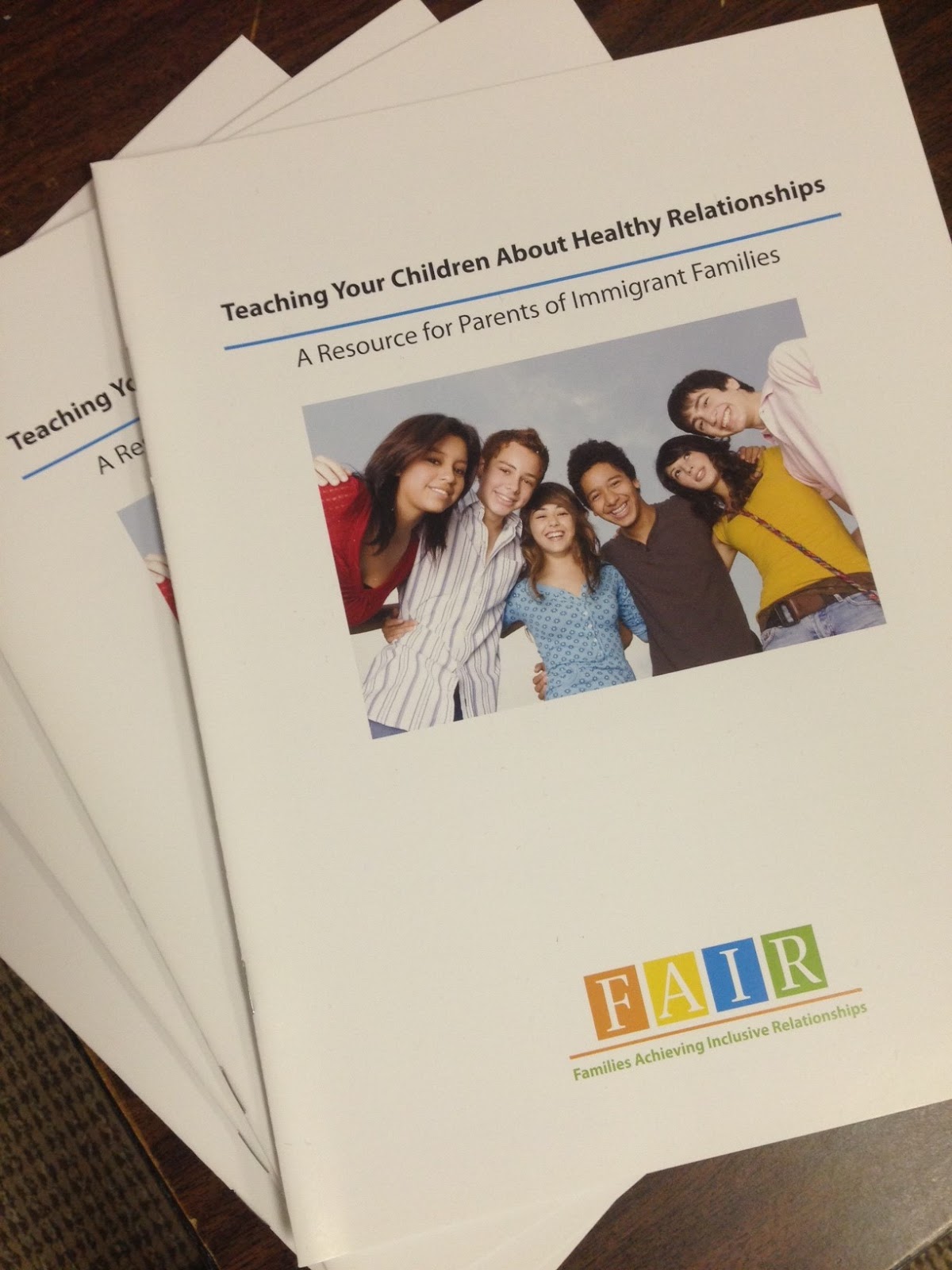
FAIR: Families Achieving Inclusive Relationships

In 2011, we began an important community development project to reach immigrant populations.

The FAIR (Families Achieving Inclusive Relationships) Project offers support and information to help parents talk to their children about their family values and how they are connected to healthy relationships and healthy bodies.

Topics include:
  • how to talk openly about relationships and values
  • understanding choices young people face when their family values are different from those of their friends
  • the challenges of raising children in a Canadian culture and how to talk to your children about those differences

A resource booklet has been developed and community workshops are offered, such as the following FREE session with Alberta Health Services:


Families Achieving Inclusive Relationships

Tuesday April 9, 2013
Sign in:    5:45 pm
Session:   6:00 pm - 8:00 pm

Alberta Children’s Hospital
Room B2-2000

 
Register online: http://fcrc.albertahealthservices.ca/ces.php

(Registration no later than April 2, 2013. Courses with low registration will be cancelled one week prior to the session.)


Monday, February 4, 2013

Questions asked during Sex Ed Class - Part 1: STIs


If a person with herpes gives someone oral sex, can the person get herpes on their genitals?

The virus that causes oral herpes is herpes simplex 1. Herpes simplex 2 causes genital herpes.


It is possible for someone with oral herpes (Simplex1) to pass that strain on to the genitals of another person during oral sex. This means that if that person contracts the virus it is a herpes simplex 1 infection on his or her genitals. This type of transmission is rare, but is possible. Usually the outbreaks of sores are milder then with herpes simplex 2 as the virus is not in its own domain.


Why does it burn sometimes when you urinate?

There can be many reasons for this, some serious and some not so serious; however it is recommended to see a doctor immediately if burning persists.

One cause of burning when you pee could be urinary tract or bladder infections (UTI). UTI’s are caused when bacteria enters the urinary tract through the urethra and are usually treated with antibiotics.

Another possibility is a yeast infection, which is usually transmitted by unprotected sexual intercourse with a partner who has a yeast infection, although antibiotics and lubricants with potentially irritating chemicals in them, like the spermicide nonoxynol 9, can also potentially cause them.

Finally, a person may feel burning during urination if they have had unprotected sex with a person who has a sexually transmitted infection, or STI. If a guy thinks he may have an STI, he can look for a discharge from the head of the penis.

An important thing to remember is that the most common symptom of an STI is still no symptom at all, and there are many reasons a person can feel a burning sensation when they urinate. Being on the safe side and going for a doctor’s visit is usually best.


Can you get any STI’s on your hand?

Scabies, which is not solely an STI can infect the skin anywhere on the body including the hand and is spread through any skin-to-skin contact.

There are over 100 types of HPV that can affect a person’s skin. While only certain strains, the sexually transmitted ones, cause genital warts, others cause warts on the hands and feet. These warts can rarely cross over but it is unlikely as the type of wart is not suited for growth in that area.


Can you have more than 1 STI at the same time?

Yes it is possible to contract any STI you come into contact with even if you have one already. You may also contract many at one time. People with compromised immune systems like those with HIV can contract infections easier including sexually transmitted ones.


Are there any ways to see if you or your partner has an STI without going to the doctor?

No. Unfortunately not. A commonality amongst all STI’s is that they can be asymptomatic (no obvious symptoms).  Check our website for where you can go for STI testing.

Tuesday, December 11, 2012

What type of birth control is right for me?

There is no ‘best choice’ of birth control that works for everyone. You have to decide what will work best for you. Look at the options and decide on a method that feels right for you.

There are many things to consider when choosing a form of birth control. Some people need to consider such things as effectiveness, side effects, ease of use, accessibility, cost, possible allergies or other medical conditions, and comfort levels around inserting certain methods vaginally or taking hormones.

Choosing a birth control method that works for you may require some planning. It should be something that you feel comfortable with. As you move into different stages in your life your birth control needs may change. Remember, you can always switch methods if your circumstances change or if you are having concerns.

Some possible questions both men and women may want to consider when choosing a method that’s right for them are:
  • How effective is this method?
  • Can I use this method, or do I have to rely on a partner to use it effectively?
  • Does this method protect against Sexually Transmitted Infections?
  • How is this method used? Does it fit my needs and lifestyle?
  • Does this method have any side effects? If yes, what are they?
  • What is the cost of this method?
  • How available is this method and where can I find it?
  • How will this method affect my ability to have or cause a pregnancy in the future?
  • Do I have an allergy or medical condition that will affect my ability to use this method?
  • How do I feel about applying this method to my body?
  • How do I feel about taking hormones or my partner having to take hormones?

You may want to speak to a health professional about your options or to discuss your concerns or questions.

If you would like more information about the different forms of birth control that are available please check out the birth control section of our website or call or email to speak to one of our counsellors.

403-283-5580
generalmail@calgarysexualhealth.ca


Monday, August 20, 2012

Sexual Health for Women who have sex with Women

We all deserve to be healthy - regardless of our gender or sexual orientation. In today's blog, we offer an overview of lesbian sexual health concerns and finding the right healthcare provider.

Whether you're young or old, single or have a partner, gynecological health care is important for all women. Periodic health exams may include breast exams and mammograms, pelvic exams, and other tests and screenings. If you're thinking of having a child, you may wish to talk with your healthcare provider about pre-planning for a healthy conception.


Safer Sex

Women who have sex with women can pass certain infections through sex play including:

Barriers can reduce risks.

  • Latex barriers (ie. dental dams) can reduce the risk of passing an infection during oral sex.
  • Use condoms on sex toys if they're shared between partners. Be sure to follow the cleaning instructions for each toy.
  • If you or your partner have sex with men, use protection to reduce your risk of infections and pregnancy.


Finding the right Healthcare Provider

Its important to find a healthcare provider that you feel comfortable with. Coming out is always your choice, however being open with your healthcare provider is important for receiving the best care possible. Here's some tips to help you find a lesbian-friendly healthcare provider:

  • Contact us or another local LGBT service-providing organization for referrals.
  • Check out potential providers by calling them to ask questions such as "Is your staff trained in lesbian health issues?".
  • Drop by potential providers' offices to check the atmosphere in person. Do they have LGBT friendly posters or other materials in the office? Are there any symbols that indicated its a safe space?

(Adapted from "Lesbian Health" pamphlet, Planned Parenthood)

Thursday, August 2, 2012

10 Things Guys Can Do About Birth Control

Birth control is not just a women's issue. There's lots that men can do to avoid an unplanned pregnancy.  In no particular order, here's a list of just 10 things:


  1. Bring up the subject. Talk to your partner about birth control before you have sex.
  2. Learn about different birth control methods to help you make good choices and so you can use it correctly.
  3. Use condoms. They are inexpensive, easy to use and you can get them without a prescription. And they also reduce your risk of sexually transmitted infections.
  4. Practice putting on a condom to help build your confidence in using them correctly and easily.
  5. For birth control methods other than condoms, your partner will need to visit a doctor or a clinic. Offer to go with her.
  6. Offer to pay for or share the cost of the prescriptions.
  7. Ask your partner if you can help with reminding her to use her birth control.
  8. Make a commitment that if you don't have a condom, or your partner forgets to use her birth control, don't have sex. Wait until you're protected.
  9. Talk about pregnancy, just in case. Talking about it will show you care.
  10. Talk to other guys to share what you know and remind them that by taking responsibility for using birth control, they are showing their partners that they care.


If birth control is a shared responsibility, you'll both benefit!  For more info about your birth control options, please contact us at 403-283-5580 or generalmail@calgarysexualhealth.ca.


(Adapted from "Birth Control: Ten Things a Man Can Do" pamphlet, Journeyworks Publishing)

Friday, December 16, 2011

Tips to Protect Yourself from STIs

Even with the best intentions, people can still get Sexually Transmitted Infections (STIs)from their partner. But the more informed you are, the easier it is to protect yourself and your partner from STIs. 

Here are some tips to help you avoid STIs. Consider which will work for you:
  • always use barriers like condoms or dental dams
  • choose safer sexual activities like kissing, touching and massaging
  • avoid sex altogether
  • reduce the number of partners you have sex with
  • get tested regularly
  • ask your partner if they’ve been tested or to come get tested with you
  • know how to use condoms effectively
  • talk to your partner about safer sex (protection, testing, STI history)
  • avoid sharing needles
  • avoid getting unprofessional tattoos or piercings

STIs can have different effects depending on the person and which STI it is. And STIs can even be present but show NO SYMPTOMS. They only way to really know if you have an STI is to get tested. 

For information on STIs and where to get tested in Calgary, visit us at http://www.calgarysexualhealth.ca/the_basics_about_stis.html.

And to see what its like to go for STI testing, view our "How to Be a SexPert" podcast:


Friday, December 9, 2011

How to Talk with your Child about Sexuality

We live in a very sexual world.  There are messages about sex all around us - on the Internet, TV, radio.  People talk about it in locker rooms, at the mall, and in our own homes. And our kids hear it all.

But our kids don't get that much useful information from all this talk. 

We want our kids to have healthy and rewarding lives.  Teaching them about sex is an important aspect of helping them live a healthy life.  But for many of us its hard to talk about sex - especially with our own children. 

At the CHSC, we have many resources and workshops that can help you feel more comfortable with talking to your kids about sex.  And in the meantime, here are a few tips:

1. Start early.  Its best to begin as soon as they're born.  Start with basic knowledge such as learning the proper names of their body parts. Knowing their body and being comfortable talking about their body is an important first step.

2. All babies anc children explore their bodies. This is a natural and normal part of development. If we yell at them or slap their hands, they'll do it anyway - but they'll feel guilty about it. And they may learn to not trust us later in life when they're looking for guidance about other things.

3. When your 3-year-old asks "Where do babies come from?", you can keep your answers simple for now.  You could say something like "Babies grow in a special place inside the mother."  As the years, pass, you can add other details.

4. Kids aged 5 - 7 may be shy about asking questions, but they likely still have them! Find opportunities to ask them questions - maybe its asking them what they think about something you see on TV, or talking about a family friend who is pregnant. Have books on hand that you can read together to help you talk about sex.

5. Most preteens aged 8 - 12 are ready to know about sex and reproduction. They need to know about the signs of puberty and the changes that will happen to their bodies as they grow up. And they need to know how to keep themselves healthy and safe.  Keep the conversations going - find moments to spend time alone with them and talk.  Get books and pamphlets that you can read together, or that they can read on their own and then talk with you after.

6. Teens aged 13 - 18 need to learn how to say "no" and to understand what "safer sex" is. They need to know how to have relationships with other people without getting hurt, or without hurting other people.  You could ask questions such as "Are you being pressured to have sex?", "Do you know how to protect yourself from pregnancy and infections?", "How will you tell them what your limits are?".

For more help with talking to your kids about sex, give us a call at 403-283-5580 or visit us online at http://www.calgarysexualhealth.ca/what_do_i_say.html.


And for a light-hearted look at having "The Talk", check out this hilarious video of Julia Sweeney describing one such experience with her 8 year old daughter.

Friday, September 16, 2011

School's back! And so are we!

With summer holidays behind us and a new school year underway, we are looking forward to another great year of providing our comprehensive sexual health education program to classrooms across Calgary!

Our school-based sex ed program works within the Alberta Education curriculum, and has been a recommended resource of the Calgary Board of Education since 1975.

We offer education programs to inform, motivate and help youth make health choices about their sexuality.  Last year, we offered programs at 23 junior and senior high schools, reaching 24,415 students in Calgary and the surrounding areas.

We've seen some great results through surveys in the classrooms:

  • 75% identified they now have knowledge of sexual health issues such as pregnancy prevention, sexually transmitted infections, and condom use.
  • 63% identified they now have an understanding of diverse sexual orientations and the impact of homophobia.
  • 81% identified they now have confidence in making sexual health decision.

These results are encouraging. But perhaps even more inspiring for us is when we receive comments like this:

"The program motivated one student to have a very serious sit down conversation with her mother about her choices, and that she wanted her mother to go to the Dr with her.  They really had not spoken in years.  This is what education should be."
- CALM Teacher

Here's to another great year ahead of informing our city's youth about healthy choices, and providing them with the tools to achieve sexual well-being.

If you are a teacher and would like more information about our school-based programs, please contact us at 403-283-5580 or generalmail@calgarysexualhealth.ca.


Thursday, June 2, 2011

The "First Time"...Part 2


Our next episode of the “How To Be A Sexpert” podcast is PART 2 of our discussion about “First Times”.

When it comes to sex, the pressure of the first time can cause all kinds of anxiety.   To reduce the stress, it is really important that you feel ready for the experience.  So, before you get into the heat of the moment, decide if you are ready to become sexually active.
In this episode of our "How To Be A Sexpert" podcast, our SexPerts talk about their decisions and thoughts about "First Times".

Friday, May 6, 2011

Youth & Sex: Answers to some Frequently Asked Questions!


In honour of International Youth Week, we are sharing some answers to a few of the common questions we receive from youth about sex and sexuality   For more information about these topics, and many more, visit us online at www.calgarysexualhealth.ca or give us a call at 403-283-5580.


If I talk to my teacher or school counsellor about sexual issues, do they have to tell my parents?

It depends. Information you share is usually kept private unless there is a risk of harm to you or another person. For example, if a young person told a teacher or school counsellor that he or she was being sexually abused, the counsellor may have a responsibility to report it. If you are unsure and concerned, before you share details you can ask if the type of information on your mind can or will be kept private.


Can I see a doctor without my parents’ permission to get birth control?

Yes. If you are worried, ask your doctor how they feel about keeping your information private from your parents. If you don't like what you hear, you can go to one of the Sexual and Reproductive Health Clinics in Calgary. These clinics have services just for young people, and will respect your privacy. They also have birth control and condoms at lower cost. You can also talk to a counsellor at the Calgary Sexual Health Centre about your options. But we are not a clinic and cannot give you a prescription for birth control.


Can a person masturbate 10 times a day?

Everyone is different. Some people masturbate every day and other people don’t. If you want to masturbate ten times a day and it isn’t getting in the way of school, homework or other responsibilities, then it is up to you. If you masturbate a lot, you may want to use a water-based lubricant like K-Y Jelly (you can buy lubricants from any drugstore) so that you don’t irritate your skin.


What does Popping the Cherry mean?

Popping the cherry is a slang term for when a woman has vaginal sex for the first time and her hymen stretches and bleeds. A hymen is usually a very thin layer of skin. It is naturally stretched with physical activity, sexual activity or using tampons. Some may bleed a little and some may not.

A hymen that has not been stretched is often considered a sign that a woman has “lost her virginity”. Most women actually don’t have am “intact” hymen by the time they start having sex. To have a good first experience with sex it helps if both people feel relaxed and aroused and are paying attention to what feels comfortable physically and emotionally. The key here is to talk to each other and go slow.


What makes people gay?

Scientists still aren’t sure whether people are born with their sexual orientation or whether it develops over time. What they do know for sure is it’s not something people can change about themselves. A person might want to use the label “gay” if they find their sexual attraction is mostly toward people of the same sex as themselves. It is normal to have some sexual feelings or a lot of sexual feelings for people the same sex as yourself. Attraction is as simple and uncontrollable as who makes your heart flutter. Curiosity and attraction toward people the same sex as yourself is totally okay and it’s up to each person what label, if any, they want to put on it.